
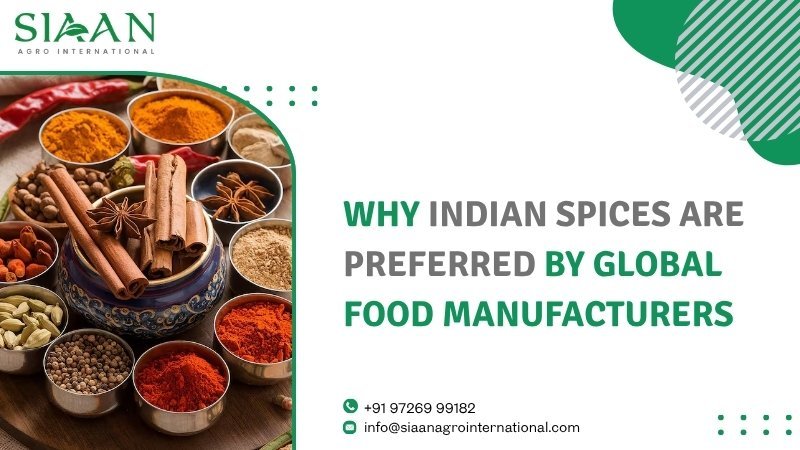
Indian spices have shaped global cuisine for centuries.
Today, they remain essential ingredients for food manufacturers, seasoning companies, restaurants, and retail brands across the world.
India produces a wide range of spices with exceptional flavor, aroma, color, and consistency.
Modern processing facilities, strict quality control, and strong export infrastructure have strengthened India’s position as the world’s leading spice supplier.
From turmeric and cumin to black pepper and fennel, Indian spices meet the needs of both traditional recipes and large-scale food production.
This guide explains why food manufacturers continue to choose Indian spices and what buyers should consider when selecting an export partner.
India’s Leadership in the Global Spice Industry
India is recognized as the world’s largest producer, consumer, and exporter of spices.
The country’s diverse climate and fertile agricultural regions support the cultivation of more than 75 spice varieties.
States such as Gujarat, Rajasthan, Kerala, Karnataka, Tamil Nadu, Andhra Pradesh, and Madhya Pradesh produce spices with distinct characteristics that suit different industries.
Indian exporters supply products to food manufacturers, seasoning companies, retailers, and distributors across North America, Europe, the Middle East, Africa, and Asia.
Continuous investment in farming practices, processing technology, and logistics allows exporters to deliver consistent quality throughout the year.
The availability of whole spices, ground spices, spice blends, and customized packaging makes India a preferred sourcing destination for businesses of every size.
India’s Rich Agricultural Diversity
India’s varied soil types and climatic conditions support the cultivation of numerous spice crops.
Each region contributes unique flavor profiles, colors, and essential oil content.
This diversity enables manufacturers to source multiple spices from a single supplier while maintaining consistent quality and supply.
Largest Producer and Exporter of Spices
India exports spices to more than 180 countries.
Strong production capacity, experienced farmers, and efficient processing facilities help maintain reliable global supply.
Large export volumes also allow buyers to source products in bulk without compromising quality.
Superior Quality and Authentic Flavor
Food manufacturers require ingredients that deliver consistent taste and appearance.
Indian spices are valued for their natural aroma, vibrant color, and high essential oil content.
Advanced cleaning, grading, sorting, and processing techniques preserve these characteristics while reducing contamination.
Exporters also provide customized specifications based on customer requirements.
Whether buyers need steam-sterilized spices, machine-cleaned products, or specific mesh sizes for powders, Indian suppliers offer flexible solutions.
Reliable quality helps manufacturers maintain product consistency across multiple production batches.
Natural Aroma and Essential Oils
Many Indian spices contain naturally high levels of essential oils.
These compounds enhance flavor, fragrance, and shelf life.
Manufacturers often require fewer additives when using premium-quality spices with strong natural characteristics.
Consistent Product Quality
Consistency is essential for industrial food production.
Leading exporters use standardized processing methods, laboratory testing, and quality inspections to ensure every shipment meets customer specifications.
Uniform color, moisture, purity, and particle size contribute to dependable manufacturing results.
Wide Variety of Export-Quality Spices
India supplies one of the world’s largest selections of spices.
Exporters offer products suitable for food processing, retail packaging, private labeling, and industrial manufacturing.
Popular export products include:
- Turmeric
- Cumin Seeds
- Coriander Seeds
- Black Pepper
- Red Chilli
- Cardamom
- Fenugreek Seeds
- Fennel Seeds
- Mustard Seeds
- Cloves
- Cinnamon
- Bay Leaves
Many suppliers also produce customized spice blends tailored to customer formulations.
Whole Spices
Whole spices retain freshness and essential oils for longer storage.
Food processors often grind them before production to achieve desired flavor intensity.
Whole spices are widely used by wholesalers, restaurants, and seasoning manufacturers.
Ground and Value-Added Products
Ground spices save processing time and improve manufacturing efficiency.
Exporters also provide blended seasonings, customized formulations, and private-label packaging for retail markets.
Strict Quality Control and Food Safety Standards
International food manufacturers demand products that comply with strict food safety regulations.
Indian spice exporters have invested heavily in modern processing facilities equipped with advanced cleaning systems, metal detectors, grading machines, and laboratory testing equipment.
Quality assurance programs reduce contamination risks and improve traceability.
Each production stage is monitored to maintain product integrity.
Cleaning, Processing, and Testing
Processing typically includes:
- Cleaning
- Destoning
- Grading
- Sorting
- Metal detection
- Moisture testing
- Microbiological analysis
- Packaging inspection
These procedures help ensure export-quality products.
International Certifications
Many exporters maintain internationally recognized certifications such as:
- ISO 22000
- HACCP
- FSSC 22000
- BRCGS
- GMP
- Organic Certification (when applicable)
These certifications demonstrate compliance with global food safety requirements and customer expectations.
Competitive Pricing and Reliable Supply
India combines large-scale production with efficient logistics, allowing exporters to offer competitive pricing without sacrificing quality.
Strong relationships between farmers, processors, and exporters create stable supply chains that support long-term business partnerships.
Buyers benefit from predictable lead times, flexible order quantities, and dependable inventory management.
Efficient Supply Chain
Integrated sourcing, processing, warehousing, and shipping reduce delays.
Many exporters also provide customized packaging, documentation, and freight coordination for international shipments.
Bulk Export Capabilities
Indian exporters can fulfill orders ranging from small retail quantities to full container loads.
Bulk purchasing often lowers transportation costs and improves supply consistency for manufacturers.
Growing Global Demand for Indian Spices
Changing consumer preferences continue to increase demand for authentic spices.
Food brands are developing products with natural ingredients, bold flavors, and recognizable seasonings.
Indian spices fit these requirements while supporting global culinary trends.
Growing interest in ethnic cuisine, clean-label products, and plant-based foods has further strengthened international demand.
Food Processing Industry
Manufacturers use Indian spices in:
- Ready meals
- Sauces
- Snacks
- Frozen foods
- Meat products
- Bakery products
- Beverage mixes
- Seasoning blends
Consistent quality helps maintain product performance across large production volumes.
Health and Wellness Trends
Consumers increasingly seek foods made with natural ingredients.
Many Indian spices contain naturally occurring compounds that contribute flavor, aroma, and nutritional value.
This trend continues to support demand across global markets.
How to Select a Reliable Indian Spice Exporter
Choosing the right supplier affects product quality, delivery performance, and long-term profitability.
Experienced exporters provide transparent communication, detailed specifications, and consistent quality assurance.
Buyers should evaluate suppliers carefully before establishing long-term contracts.
Key Evaluation Criteria
Consider suppliers based on:
- Export experience
- Production capacity
- Food safety certifications
- Laboratory testing
- Traceability
- Packaging options
- Private labeling
- Customer support
- Global shipping experience
- Product consistency
Questions Buyers Should Ask
Before placing an order, ask about:
- Product specifications
- Purity levels
- Moisture content
- Shelf life
- Processing methods
- Packaging options
- Minimum order quantity
- Lead times
- Laboratory reports
- Certifications
These questions help ensure the supplier can meet technical and commercial requirements.
Conclusion
Indian spices remain the first choice for global food manufacturers because they combine authentic flavor, reliable quality, competitive pricing, and dependable supply.
India’s agricultural diversity, advanced processing facilities, strict food safety standards, and strong export infrastructure enable suppliers to meet the requirements of international buyers across multiple industries.
Businesses that partner with trusted Indian spice exporters gain access to premium ingredients, flexible packaging, consistent production, and long-term sourcing reliability, helping them deliver high-quality products to consumers worldwide.
Sourcing Indian spices?
Siaan Agro International supplies export-grade cumin, coriander, fennel, fenugreek, dill and sesame seeds in bulk from Unjha, Gujarat.
Request a Quote