
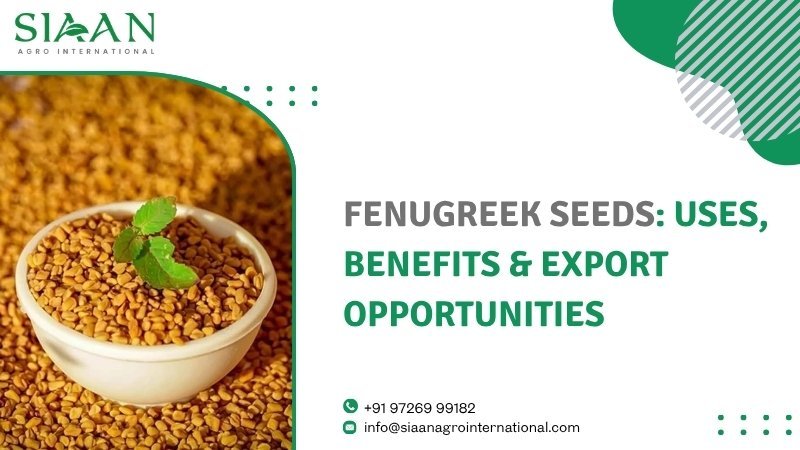
Fenugreek seeds, commonly known as methi seeds, are among India’s most valuable spice exports.
Their slightly bitter taste, rich aroma, and nutritional profile make them popular across food processing, pharmaceuticals, nutraceuticals, cosmetics, and herbal industries.
India is one of the world’s largest producers and exporters of fenugreek seeds, supplying premium-quality products to buyers across Europe, North America, the Middle East, Africa, and Asia.
This guide explains the uses, nutritional benefits, export opportunities, quality standards, and sourcing considerations for fenugreek seeds.
What Are Fenugreek Seeds?
Fenugreek seeds come from the plant Trigonella foenum-graecum, an annual herb belonging to the legume family.
The seeds are small, golden-yellow, hard, and rectangular with a characteristic earthy aroma and mildly bitter taste.
They are widely used in traditional cooking, spice blends, pickles, bakery products, herbal remedies, and dietary supplements.
Fenugreek has been cultivated for thousands of years and remains an essential ingredient in Indian, Middle Eastern, Mediterranean, and North African cuisines.
Its versatility extends beyond cooking.
Manufacturers also process fenugreek into powders, extracts, capsules, teas, and essential ingredients for functional foods.
Growing demand for natural ingredients continues to increase international trade in fenugreek seeds.
Origin and Botanical Profile
Fenugreek is native to parts of Asia and the Mediterranean region.
India has become the world’s largest producer due to favorable climatic conditions and extensive cultivation practices.
The plant grows to approximately 30–60 cm and produces slender pods containing multiple hard seeds.
The seeds are rich in fiber, protein, saponins, flavonoids, and naturally occurring compounds used in food and wellness products.
Major Producing Regions in India
The leading fenugreek-producing states include:
- Rajasthan
- Gujarat
- Madhya Pradesh
- Uttar Pradesh
- Haryana
These regions produce export-quality seeds known for their purity, uniform size, and strong aroma.
Modern farming methods and post-harvest processing help maintain consistent quality for international buyers.
Nutritional Value of Fenugreek Seeds
Fenugreek seeds contain a wide range of nutrients that contribute to their popularity in both food and health industries.
They are naturally rich in:
- Dietary fiber
- Plant protein
- Iron
- Magnesium
- Potassium
- Phosphorus
- Manganese
- Vitamin B6
- Antioxidants
The seeds also contain bioactive compounds such as galactomannan, diosgenin, trigonelline, and saponins.
These compounds have made fenugreek a common ingredient in functional foods and dietary supplements.
Many food manufacturers use fenugreek because it provides both flavor and nutritional value.
Key Nutrients
Fenugreek offers an excellent combination of fiber, protein, minerals, and phytochemicals.
Its high soluble fiber content contributes to its widespread use in food formulations and health products.
Natural antioxidants further enhance its commercial value.
Health Benefits
Fenugreek has traditionally been associated with several wellness applications.
Research continues to explore its role in supporting:
- Healthy digestion
- Blood sugar management
- Heart health
- Appetite control
- General wellness
While these benefits are promising, manufacturers should avoid making unsupported medical claims and comply with local food regulations.
Common Uses of Fenugreek Seeds
Fenugreek seeds are used across multiple industries because of their flavor, nutritional value, and processing flexibility.
Whole seeds, cracked seeds, powders, and extracts each serve different commercial purposes.
Food Industry Applications
Fenugreek is widely used in:
- Curry powders
- Spice blends
- Pickles
- Ready-to-cook foods
- Bakery products
- Sauces
- Seasonings
- Snack foods
- Instant meals
Its distinctive flavor enhances both traditional and modern food products.
Nutraceutical and Herbal Products
Manufacturers process fenugreek into:
- Capsules
- Herbal powders
- Functional beverages
- Tea blends
- Dietary supplements
- Herbal formulations
The ingredient continues to gain popularity as consumer demand for plant-based wellness products increases.
Why India Leads the Global Fenugreek Seed Market
India dominates global fenugreek production because of suitable agricultural conditions, experienced farmers, efficient supply chains, and advanced processing facilities.
Indian exporters supply both conventional and organic fenugreek seeds to international buyers.
Many exporters offer customized cleaning, grading, sorting, packaging, and private labeling services.
Large production capacity enables year-round availability and competitive pricing.
Export Advantages
Key advantages include:
- Consistent supply
- Premium quality
- Competitive pricing
- Export-grade processing
- Food safety compliance
- Bulk packaging options
- Private labeling
- Reliable logistics
These factors make India the preferred sourcing destination for global buyers.
Major Importing Countries
Indian fenugreek seeds are exported to:
- United States
- Canada
- United Kingdom
- Germany
- United Arab Emirates
- Saudi Arabia
- Australia
- South Africa
- Malaysia
- Singapore
Demand continues to rise due to growing interest in natural ingredients and ethnic cuisines.
Quality Standards for Export
Export-quality fenugreek seeds must meet strict quality and food safety requirements.
International buyers typically evaluate products based on:
- Purity
- Moisture
- Foreign matter
- Uniform size
- Color
- Aroma
- Microbiological safety
- Pesticide residue compliance
Leading exporters perform laboratory testing before shipment.
Cleaning, Grading and Processing
Processing generally includes:
- Cleaning
- Destoning
- Sorting
- Grading
- Metal detection
- Quality inspection
- Packaging
These steps improve product consistency and reduce contamination.
Packaging and Storage
Common export packaging includes:
- 25 kg bags
- 50 kg bags
- PP woven bags
- Paper bags
- Customized retail packs
Storage should be cool, dry, and protected from direct sunlight to preserve freshness and shelf life.
How to Choose a Reliable Fenugreek Seed Exporter
Selecting the right supplier helps ensure consistent quality, timely deliveries, and long-term business success.
Evaluate suppliers based on experience, certifications, production capacity, quality systems, and customer support.
Request product samples before placing large orders.
Independent laboratory reports provide additional confidence.
Questions Buyers Should Ask
Ask suppliers about:
- Product specifications
- Moisture levels
- Purity percentage
- Processing methods
- Production capacity
- Lead times
- Packaging options
- Traceability
- Laboratory testing
- Export experience
Required Certifications
Reliable exporters often maintain certifications such as:
- ISO 22000
- HACCP
- FSSAI
- GMP
- BRCGS (where applicable)
- Organic certification (if required)
These certifications demonstrate commitment to food safety and international quality standards.
Conclusion
Fenugreek seeds remain one of India’s most valuable agricultural exports due to their broad applications, nutritional profile, and strong international demand.
From food manufacturing and seasoning blends to nutraceuticals and herbal products, fenugreek offers exceptional commercial value.
Businesses sourcing from trusted Indian exporters benefit from consistent quality, competitive pricing, international food safety standards, and dependable global supply.
By choosing suppliers with advanced processing facilities, recognized certifications, and transparent quality control systems, importers can build long-term partnerships and confidently meet growing market demand.
Sourcing Indian spices?
Siaan Agro International supplies export-grade cumin, coriander, fennel, fenugreek, dill and sesame seeds in bulk from Unjha, Gujarat.
Request a Quote